
The same counter problem,
in four different trades
A queue, a scanner, stock that has to be right, and tax that has to be correct. What changes is which part is hardest.
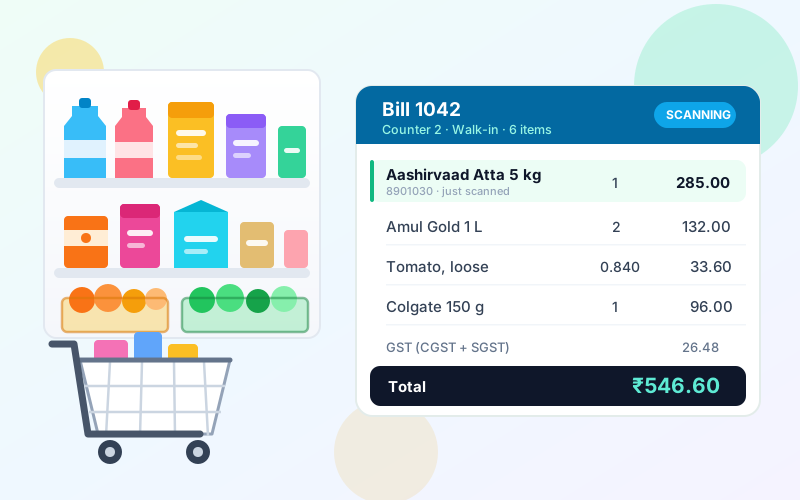
A queue that does not build up
Six in the evening, twenty people, half of them buying loose goods. The till has to keep pace with the hands, not the other way round.
- Scan-and-go billing with the keyboard, never the mouse
- Weighing-scale labels read straight into the bill at the right weight
- Split tender across cash, card and UPI without leaving the screen
- Low-stock list short enough to actually walk the aisles with
Batch and expiry, handled for you
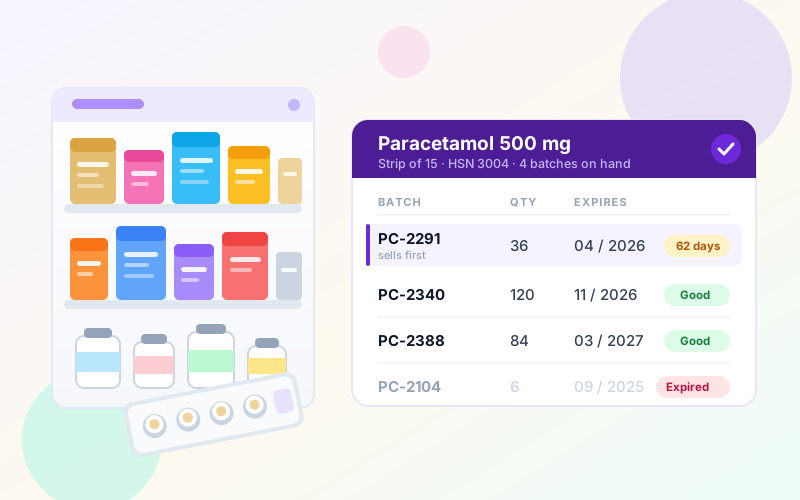
The stock question in a chemist is never just "how many" — it is "how many, from which batch, expiring when".
- Cost and expiry tracked per batch, not per product
- Oldest stock offered first, so nothing quietly ages at the back
- What is about to expire, listed before the representative asks
- Customer history when somebody asks what they bought last time
Priced by weight, billed in a second
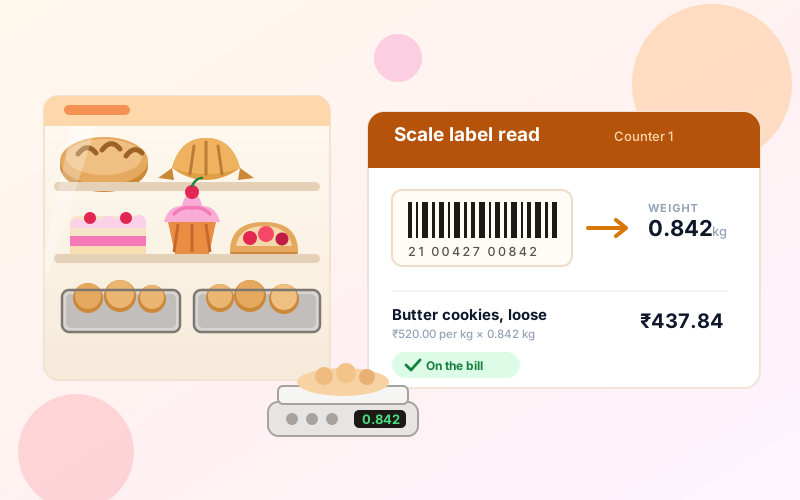
Loose goods are where most billing software starts arguing with the shop. Weigh it, print the label, scan it — that is the whole flow.
- Scale labels decoded into quantity and price automatically
- Decimal quantities keyed by hand when the scale is busy
- Your own barcode labels for anything the manufacturer did not print
- Day-end wastage recorded as an adjustment, with the reason on it
Deep catalogue, real margins
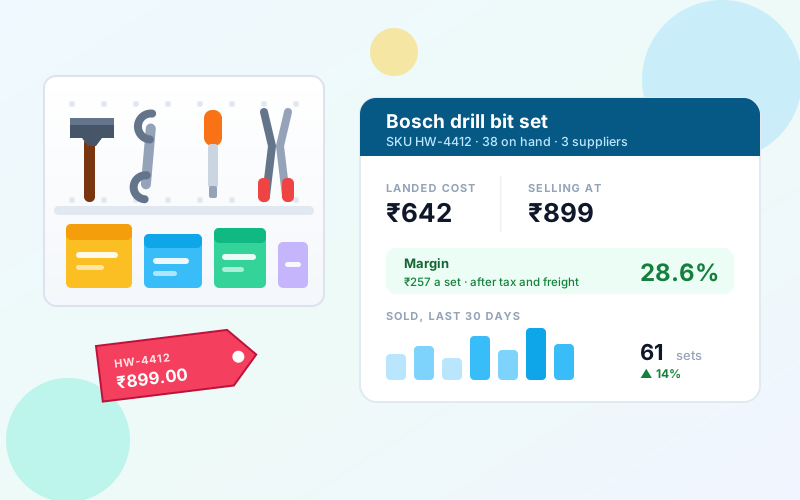
Nine thousand items, a hundred suppliers, and a margin that differs line by line. The catalogue has to be searchable and the cost has to be right.
- Search by name, code or barcode across a large catalogue
- Purchase entry that updates cost, so profit reports mean something
- Supplier dues and payments against the bill they belong to
- Units, brands and categories that match how you actually buy
Most counters are the same shape
Stationery, mobile accessories, provisions, a canteen, a farm shop — if it has a barcode, a price and a tax rate, it bills the same way.